King Charles Takes Charge — A Royal Turning Point
King Charles shocked Britain with bold moves against Prince Andrew — discover the five decisive actions that reshaped the modern monarchy.
5 Powerful Moves King Charles Made Against Prince Andrew
King Charles Takes Charge — A Royal Turning Point
King Charles has entered a defining chapter of his reign. Instead of preserving silence, he acted. His choices surrounding Prince Andrew reshaped not only a family relationship but the moral structure of the British monarchy. The King’s actions show that authority within the Crown now demands accountability, transparency, and courage.
For years, controversy swirled around Andrew, tarnishing royal credibility. Many expected quiet damage control. Instead, the King delivered decisive leadership. His five powerful moves formed a blueprint for a modern monarchy—one that prioritizes integrity over inheritance.
This story is not simply about punishment. It is about evolution, image, and the hard truth that even royal blood cannot excuse poor judgment.
Move 1: Reclaiming the Royal Image Through Accountability
When public trust weakens, silence becomes complicity. King Charles recognized that the monarchy’s reputation was eroding. Rather than hide the scandal, he faced it. He removed protection, demanded accountability, and refused to disguise wrongdoing behind tradition.
For the first time in modern royal history, a reigning monarch directly confronted a sibling’s misconduct. The move startled palace insiders yet reassured a public that wanted proof of moral consistency.
Andrew lost his honorary military titles and royal patronages. The decision sent a clear message: responsibility extends to every rank within the family. Instead of waiting for external pressure, the King initiated reform from within.
Observers called this the moment the monarchy grew up. Accountability, once a private affair, became a public commitment.
The Moral Message Behind Royal Responsibility
Furthermore, King Charles framed accountability not as humiliation but as evolution. He understood that a royal family mirrors the ethics of its era. Hence, by confronting the issue rather than concealing it, he demonstrated a kind of leadership grounded in honesty. In addition, this shift taught citizens that prestige means little without principle. Consequently, public respect began to rebuild—not because of speeches, but because of sincerity. The King’s quiet steadiness carried more power than any royal proclamation.
Move 2: Ending Prince Andrew’s Privileges and Public Duties
Leadership sometimes means cutting close ties. King Charles understood that the monarchy could not function while its members faced unresolved controversy. He acted quickly, ending his brother’s official duties and withdrawing him from state appearances.
No longer could Andrew represent Britain abroad or attend ceremonial events in uniform. The decision protected the dignity of the Crown while signaling that service must be earned, not inherited.
Public reaction reflected relief more than shock. Supporters of the King praised the clarity of his stance. Even critics admitted that decisive action was overdue.
Within weeks, media narratives shifted from outrage to respect. The monarchy, long accused of shielding its own, suddenly looked disciplined and self-aware. The King had transformed a scandal into a demonstration of ethical leadership.
Why Timing Was Everything in the King’s Decision
At the same time, King Charles chose his timing with remarkable precision. Acting too early might have appeared impulsive, while waiting too long could have seemed weak. Therefore, his carefully timed announcement signaled measured control rather than reaction. Moreover, the King’s approach prevented further polarization and allowed the decision to be viewed as deliberate, not emotional. As a result, his leadership appeared steady and strategic, giving the monarchy breathing room to rebuild its narrative.
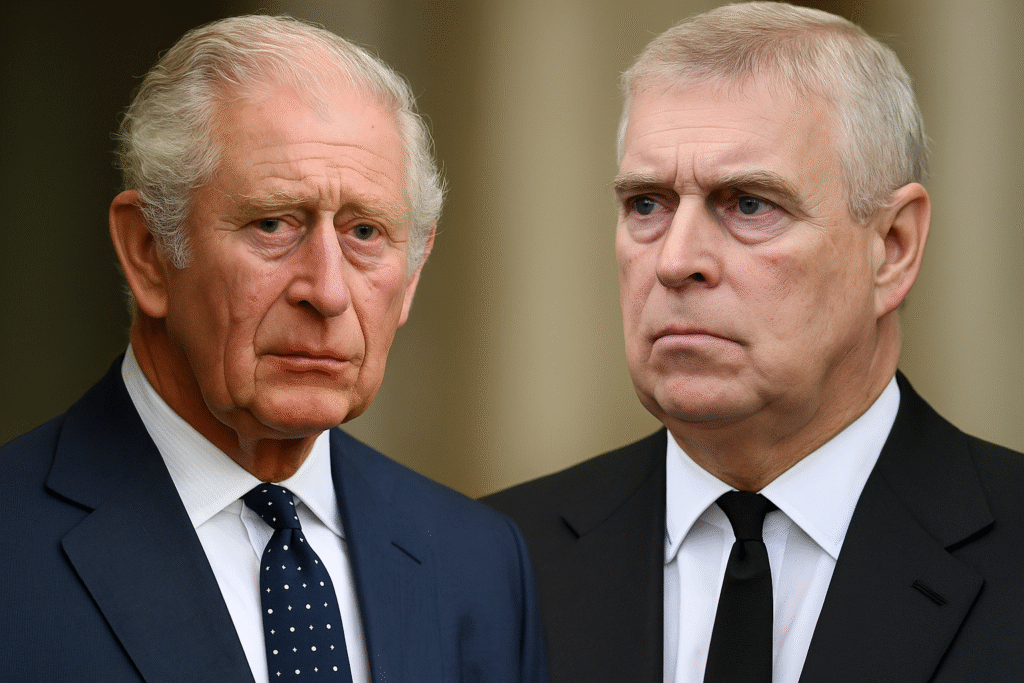
Move 3: The Financial Cut That Spoke Louder Than Words
Actions involving money often speak the loudest. King Charles addressed the financial dimension head-on. He ended royal funding for his brother and removed any link between taxpayer funds and Andrew’s private lifestyle.
The decision resonated across Britain. Many citizens struggling with economic hardship saw fairness restored. The King’s message was unmistakable: royal privilege carries personal responsibility.
Instead of relying on allowances from the Sovereign Grant, Andrew now funds his residence and expenses independently. The adjustment was not vindictive; it was practical. It protected the monarchy from accusations of favoritism and proved that fiscal discipline applies even at the top.
Financial independence also served a symbolic purpose. It reinforced the idea that respect cannot be bought—it must be maintained through behavior and contribution.
By addressing finances openly, King Charles advanced royal transparency further than any predecessor.
Public Perception of Financial Justice
Meanwhile, public dialogue around King Charles’s financial decision expanded beyond royal watchers. Economists and social commentators noted how the move aligned the monarchy with modern governance standards. Moreover, ordinary citizens saw it as a fair adjustment that echoed their own struggles for accountability in institutions. In short, the King’s financial realignment not only protected the royal brand but also humanized it. That perception—of fairness and moral clarity—became one of the strongest pillars of his reign so far.
The Hidden Symbolism Behind Financial Independence
Moreover, King Charles didn’t just cut expenses; he redefined what financial dignity means inside the royal family. The move symbolized an end to quiet dependency and the start of personal accountability. It reminded the public that even within the palace, actions have consequences. As a result, the monarchy began to mirror the same standards it expects from its people. Furthermore, the King’s calculated decision balanced compassion with principle—he chose reform, not revenge.
Move 4: Protecting the Crown’s Reputation at All Costs
Once structural reforms were in motion, the King turned his attention to the monarchy’s global image. King Charles knew that a reputation, once damaged, spreads faster than any statement. He reorganized palace communications, emphasizing dignity, brevity, and factual clarity.
Every announcement carried precision. Press officers avoided speculation and centered the conversation on the institution’s values rather than its scandals. Behind closed doors, strategy meetings focused on rebuilding narrative trust.
The King also redefined what “modern monarchy” means in the digital age. Viral content can shape perception within minutes, so he prioritized restraint. By limiting comments and carefully choosing his timing, he allowed the truth to speak louder than reaction.
This restraint impressed crisis-management experts. The King turned silence into strength, proving that calm control can outweigh noise in an era of instant outrage.
Global media outlets contrasted his composure with the sensationalism that often surrounds royal stories. That contrast rebuilt confidence.
Through strategic communication, King Charles protected the monarchy’s symbolic authority while preparing it for future scrutiny.
A New Communication Code Within the Palace
Consequently, the palace introduced internal reforms to govern how royal stories are shared. Staff received briefings on ethical disclosure, timing, and tone. In addition, King Charles emphasized that authenticity should always outweigh optics. This shift from reaction to reflection transformed the monarchy’s relationship with the media. Since then, the institution has adopted an almost corporate precision—organized, transparent, and responsive. Therefore, the King’s communication strategy stands as a model for dignified crisis control in a hyperconnected era.
The Silent Strength of Strategic Patience
In the weeks that followed, King Charles demonstrated remarkable restraint. While media headlines demanded immediate reaction, he waited. Consequently, every public statement carried more weight, each word chosen with purpose. Moreover, his quiet patience contrasted sharply with the noise of speculation, reinforcing an image of dignified command. This strategy transformed silence into influence—proof that in leadership, timing and tone often matter more than volume.
Move 5: Rebuilding Trust Within the Monarchy and Public
After decisive actions, healing came, and King Charles redirected focus from discipline to renewal. He opened channels of transparency across royal operations—charities, travel expenses, and staff structures—inviting closer public oversight.
This cultural shift encouraged accountability at every level. Senior royals modeled community engagement and humanitarian work rather than ceremonial appearances. The emphasis moved from spectacle to service.
Within the palace, trust grew stronger. Family members began aligning around a shared mission: modernizing without losing heritage. Public opinion gradually softened. Surveys revealed that many citizens viewed the King as a steady hand guiding the monarchy through turbulence.
He demonstrated that authentic leadership combines compassion with firmness. Rather than divide the family, he re-anchored it in principles of honesty and duty.
Generational Lessons for the Next Heirs
Furthermore, King Charles used this period of reform as an educational moment for the younger generation of royals. He encouraged Prince William and Princess Kate to view leadership as service rather than entitlement. Meanwhile, the King guided his grandchildren to understand humility as a royal strength, not a weakness. Over time, these lessons are expected to shape how the future monarch rules—a blend of empathy, efficiency, and moral awareness. In essence, this internal mentorship ensures that the Crown continues evolving with each generation.
Public Reaction — Support, Shock, and Global Debate
Reactions worldwide mixed empathy with astonishment. Britons appreciated King Charles’s readiness to place ethics above emotion. Across Europe, commentators compared his firmness to the political accountability expected of elected leaders.
Social media reflected both admiration and unease. Supporters hailed the King’s maturity; critics questioned whether the family bond could ever heal. Yet every debate confirmed one fact: the monarchy still matters.
Even those skeptical of royal privilege acknowledged the moral clarity behind the King’s actions. Public figures from academia to entertainment described him as the first monarch in decades to merge symbolism with substance.
International coverage turned the episode into a lesson on leadership under pressure. Few institutions face public judgment as intensely as the British Crown, yet King Charles managed the crisis without theatrical defense or denial.
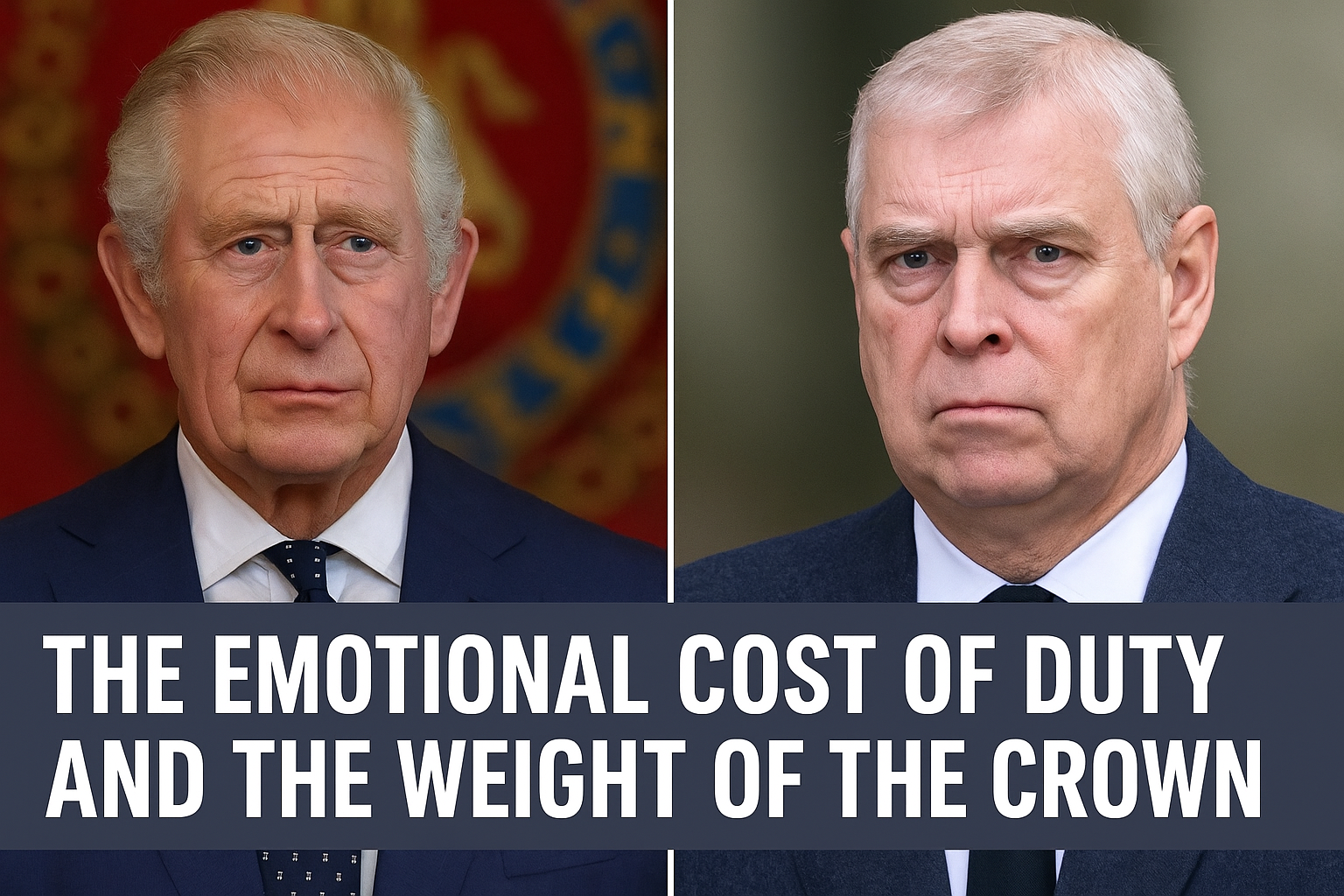
The Emotional Cost of Duty and the Weight of the Crown
Despite the strategic brilliance behind his choices, King Charles has also borne an emotional toll rarely discussed in the public sphere. Every decisive move came with personal sacrifice. The monarch is not only a sovereign but a brother, a father, and a son still living in the shadow of Britain’s longest-reigning queen. Therefore, the burden of duty often collides with private grief. Cutting off Prince Andrew was not an act of cruelty; it was an act of conscience — one that left the King to reconcile leadership with love. Moreover, those closest to him report that his compassion never vanished; it merely bowed to responsibility.
Throughout his reign, King Charles has carried the dual weight of heritage and reform. On one hand, tradition demands loyalty to blood; on the other, public trust demands loyalty to principle. Balancing the two requires extraordinary restraint. Consequently, the King has learned to convert emotion into purpose. Each policy decision, each public statement, and even each silence now echoes with calculation — not out of coldness, but from necessity. The British people have come to see him as a man tempered by experience, one who values progress yet honors the emotional complexity of family ties.
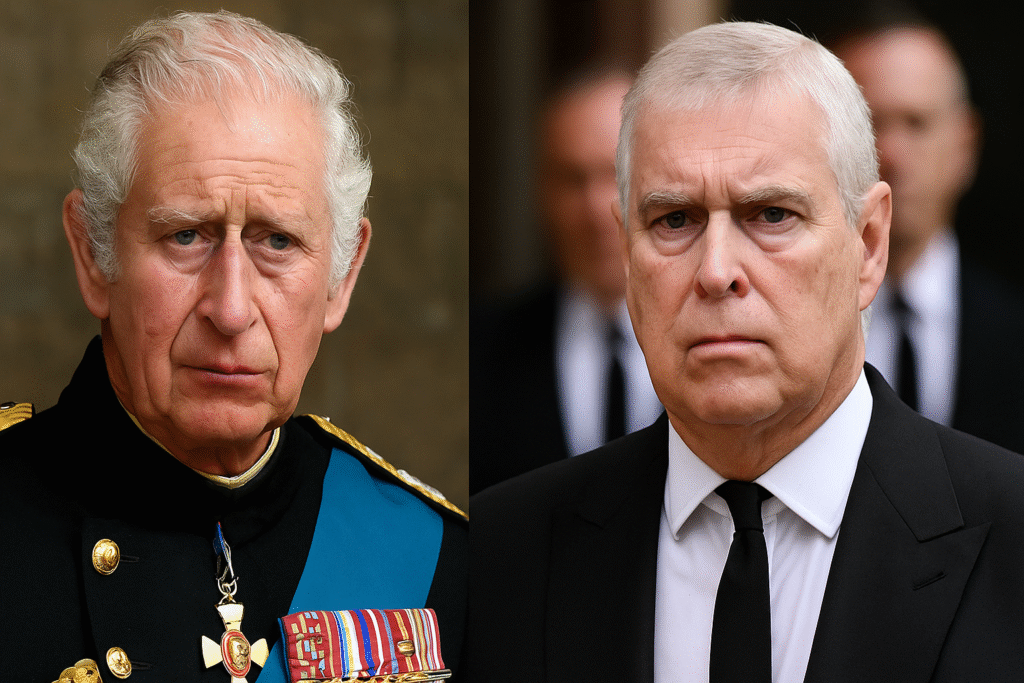
Reflective & Royal
Furthermore, this emotional endurance has given the monarchy new depth. For decades, royal authority appeared distant and untouchable. Under King Charles, vulnerability has become part of leadership. Admitting pain without surrendering control shows humanity without weakness. In addition, his composed demeanor before cameras hides the introspection of a leader who questions himself as much as he commands others. As a result, the public no longer views the monarch as an untouchable symbol but as a man confronting the same conflicts they face — between heart and obligation, compassion and consequence.
Ultimately, the emotional cost of these decisions will shape the legacy of his reign. History rarely remembers the sleepless nights behind royal decrees, yet those moments define the humanity of a monarch. Through sacrifice, reflection, and endurance, King Charles reminds Britain that leadership is not measured by comfort, but by the courage to carry both crown and conscience at once.
The Media’s Mixed Portrayal of Royal Accountability
Meanwhile, the global media crafted contrasting narratives about King Charles’s firmness. Some headlines praised his courage, calling him a “reform monarch,” while others framed his decision as ruthless. Nevertheless, the King maintained silence, proving that leadership doesn’t require endless explanation. Instead, results became his statement. Consequently, the monarchy regained control of its story by refusing to participate in tabloid theatrics. That subtle defiance reminded the world that restraint, when purposeful, is a royal art.
What This Means for the Future of the Royal Family
King Charles’s strategy offers a glimpse into the monarchy’s next chapter. Future heirs—Prince William, Prince George, and Princess Charlotte—will inherit a leaner, more disciplined institution.
The reforms emphasize merit, service, and ethical conduct over hierarchy. Ceremonial splendor will continue, but substance now defines survival. In this transformation, Charles positions the monarchy closer to modern democratic ideals without surrendering its mystique.
Observers predict that his reign will serve as a model for other royal houses navigating similar crises. Transparency, when paired with dignity, strengthens tradition rather than erodes it.
The public’s expectation has changed permanently. The monarchy must listen, adapt, and demonstrate relevance. Through his five moves, the King has shown how that evolution begins.
Additionally, King Charles’s transformation has inspired other constitutional monarchies to revisit their boundaries between public image and private accountability. From Europe to Asia, royal houses quietly observe how Britain maintains reverence without secrecy. Therefore, the King’s legacy extends beyond domestic politics—it influences international perceptions of moral authority. Through measured reform, he has proven that even ancient institutions can modernize without losing their essence.
Final Thoughts — Why King Charles’s Strategy May Redefine Royal Power
Power today depends less on privilege and more on principle. King Charles proved that reform can coexist with respect for tradition. His decisions regarding Prince Andrew reestablished moral leadership at the top of the monarchy.
By taking initiative, he ended years of speculation. By emphasizing integrity, he transformed scandal into a statement of purpose. Every action underscored that credibility outweighs convenience.
Leadership, in his hands, looks both human and historic. He acts with compassion yet stands firm when duty calls. His reign reminds Britain—and the world—that true royalty comes not from birthright but from the courage to protect what is right.
In balancing family loyalty with national responsibility, King Charles has drawn a new line in royal history. His measured approach ensures that the Crown evolves gracefully, reflecting the values of a modern nation while honoring centuries of heritage.
The story of his five powerful moves will be remembered as the moment the monarchy reclaimed its moral authority and reconnected with the people it serves.
Turning Crisis Into Opportunity for Renewal
Even amid controversy, King Charles found opportunity. Instead of letting scandal define his reign, he used it to refine the monarchy’s mission. Furthermore, each challenge tested the limits of tradition and exposed the strength of adaptation. Because of this, the King’s approach converted potential collapse into renewal. As the monarchy modernizes, his method stands as evidence that endurance comes not from rigidity but from reinvention.
The Legacy of a Monarch Who Listened
In conclusion, King Charles has done what few leaders manage—he listened before acting. His patience during public storms revealed a modern understanding of power: influence grows through empathy, not fear. As history continues to unfold, the King’s decisive yet compassionate reign will stand as proof that integrity is timeless. Moreover, his story reminds future monarchs that courage is not measured by dominance but by the willingness to evolve.
King Charles III strips Prince Andrew of titles, evicts him from royal home