Meghan’s Masterplan — The Strategy Behind the Royal Wedding
Meghan Markle’s royal wedding wasn’t just romance — it was strategy. Discover 7 shocking ways she shaped it and how Prince William saw through her.
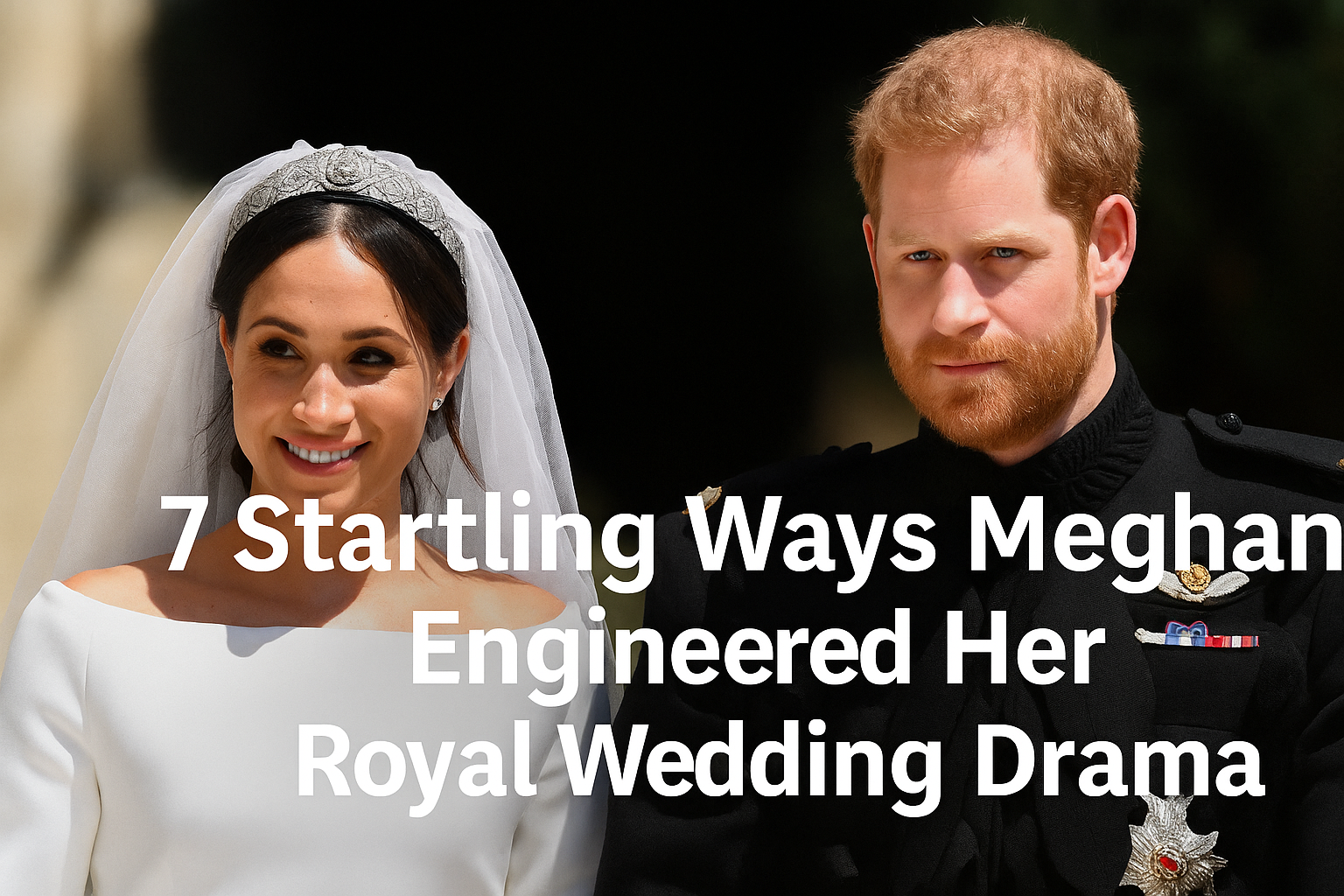
Meghan Markle’s royal wedding to Prince Harry remains one of the most talked-about royal events in modern British history. On the surface, it looked like a fairy tale — a graceful union of love, tradition, and contemporary values. Yet, royal insiders suggest the occasion was far more calculated than it appeared.
According to Lady Elizabeth Anson, a cousin to Queen Elizabeth II, Meghan “engineered” her royal wedding with extraordinary precision. Every detail — from the ceremony’s music to the guest list — was meticulously chosen. Prince William, however, reportedly saw through her intentions. Whether one views this as ambition or awareness, Meghan’s wedding revealed the mind of a woman determined to control her story.
Let’s explore seven startling ways she shaped the day that changed both her life and the royal image forever.
1. Meghan’s Strategic Vision — Planning a Modern Fairy-tale
From the moment her engagement was announced, Meghan had a clear sense of direction. She wasn’t entering a world of fame — she was entering history. Rather than surrendering to royal protocol, she sought to blend personal authenticity with ceremonial splendor.
Therefore, she chose to design her wedding as a global statement. Every scene had meaning. The venue, Windsor Castle, represented royal tradition, while the music and guest list added modern rhythm. The blend created something both ancient and alive.
Furthermore, insiders later admitted she worked closely with advisers to perfect timing, tone, and aesthetics. Instead of relying purely on palace staff, Meghan surrounded herself with creative professionals from outside the royal circle. Her goal was simple yet bold — a royal wedding that would reflect inclusivity, equality, and emotion.
Consequently, the event became a message. It declared that royalty could evolve. It proved that love, grace, and self-expression could coexist with crown and custom.
2. Guest List Power Play — Friendship as Strategy
When the names on the guest list surfaced, the public immediately noticed the unusual mix. There were heads of state, celebrities, and activists, alongside royal relatives and diplomats. Each choice was deliberate.
Moreover, the inclusion of Oprah Winfrey, Serena Williams, and George and Amal Clooney wasn’t accidental. Those figures represented empowerment, diversity, and modern influence — values Meghan admired and wanted to align with.
However, her decisions unsettled some within palace walls. Traditionalists expected a more conventional guest list dominated by aristocrats and family allies. Prince William, according to sources, quietly questioned whether Meghan was prioritizing her image over heritage.
Even so, Meghan achieved balance. Her guest list told the world that she belonged both to Hollywood and the monarchy. It reflected the spirit of a woman confident enough to define her surroundings.
Through thoughtful inclusion, she redefined royal representation. She demonstrated that royalty could share the table with cultural voices, not just noble titles.
3. Emotional Vows — Love with a Message
The ceremony itself reflected Meghan’s emotional intelligence. She approached her vows not as a performance, but as an opportunity to speak her truth. By removing the word “obey” from the traditional wording, she embraced equality within marriage while respecting sacred tradition.
Furthermore, she selected Bishop Michael Curry to deliver a passionate sermon about love, compassion, and unity. His message electrified the audience and captured international attention. It was the first time a royal ceremony had included such expressive spirituality.
Additionally, the blend of gospel music and classical hymns showcased cultural fusion — something no previous royal bride had attempted. It wasn’t rebellion; it was evolution.
As the choir sang “Stand by Me,” millions watching across the world felt the sincerity of the moment. Meghan’s decisions ensured her wedding carried heart and purpose, not merely pageantry.
Consequently, she turned tradition into transformation. Her vows didn’t just unite two people; they united two worlds.
The Global Impact — How Meghan’s Ceremony Shifted Cultural Perception
Beyond the royal walls, Meghan’s wedding sparked a global dialogue. Millions felt that they were witnessing more than a royal union — they were witnessing a cultural breakthrough. For many across the Commonwealth and America, the moment symbolised representation, identity, and progress.
Furthermore, the ceremony’s diversity resonated deeply with people who had never before seen their own stories reflected within the British monarchy. When the Kingdom Choir sang “Stand by Me,” their heartfelt harmonies carried more than music; they carried history. It wasn’t simply about race — it was about inclusivity, empathy, and shared belonging.
Social commentators observed that Meghan brought emotional accessibility to an institution long seen as distant. In a single hour of televised tradition, she redefined how the world perceived royalty. Her story as a biracial, self-made woman resonated with millions who had previously viewed the royal family as untouchable.
Moreover, her wedding inspired countless discussions in universities, media panels, and social platforms. Academics called it “a cultural recalibration,” arguing that Meghan used ritual as activism — subtly inserting modern values into a deeply historical setting.
This cultural echo extended beyond fashion or ceremony. It became a movement — a statement that even the oldest institutions can evolve when faced with authenticity.
4. Silent Tension — William’s Perception of Meghan’s Intent
Behind the grace and grandeur, there reportedly existed quiet friction between Meghan and Prince William. Long before the ceremony, William had expressed concern about the couple’s rapid progression. His caution stemmed from experience, not hostility.
However, Lady Elizabeth Anson’s insight added nuance. She believed William recognized Meghan’s ability to control narratives. While many admired her confidence, William viewed it as calculation.
Even so, during the ceremony, no tension appeared visible. Both brothers smiled and fulfilled their roles perfectly. Yet royal watchers sensed subtle distance. William’s reserved demeanor contrasted sharply with Harry’s warmth and excitement.
Still, Meghan remained poised. Every movement, every smile, appeared intentional. She knew millions were watching, and she mastered her composure flawlessly.
Moreover, her restraint sent a message: she would not allow whispers or criticism to define her. Instead, she relied on dignity — her most excellent form of defense.
Media Interpretations — The Making of a Modern Villain or Visionary
As soon as the wedding concluded, the media shifted focus from romance to rivalry. Tabloids began dissecting every interaction between Meghan and the royal family. Headlines alternated between praise and suspicion, portraying her as either a reformer or a disruptor.
However, the framing wasn’t accidental. Meghan’s background as an actress made her an accessible target for speculation. Her gestures, her expressions, even her silence became points of interpretation. For many journalists, she wasn’t just a duchess — she was a storyline.
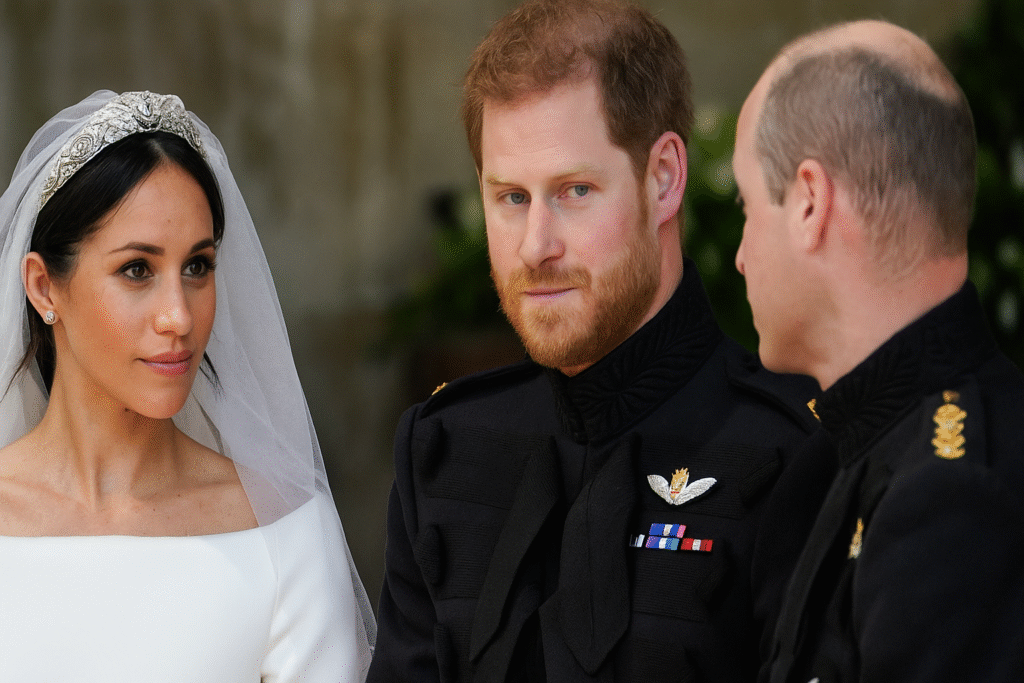
Furthermore, her confidence often clashed with the monarchy’s preference for quiet conformity. Where others might have withdrawn, Meghan stood firm. She spoke with conviction, maintained posture, and addressed causes directly. This approach won admiration abroad but stirred unease at home.
It’s essential to understand that media framing creates archetypes. Royal women are often cast as either saints or schemers. Diana was once branded rebellious before becoming beloved. Similarly, Meghan’s assertiveness was reinterpreted as ambition.
Therefore, when Lady Elizabeth Anson remarked that William “saw right through” Meghan, her words didn’t just describe royal insight — they reflected decades of media conditioning. The world tends to mistrust women who shape their narrative rather than inherit it.
Still, Meghan refused to let opinion dictate identity. Her ability to remain calm amid noise became her quiet triumph. Through poise and principle, she demonstrated that grace is sometimes the loudest form of defiance.
5. Fashion as Language — Every Detail Spoke
Fashion has always served as a form of silent communication. For Meghan, her wedding attire spoke louder than words. Her Givenchy gown, crafted by Clare Waight Keller, symbolized simplicity and purpose. It reflected discipline rather than indulgence.
Likewise, her veil carried meaning. It featured hand-embroidered flowers from all 53 Commonwealth nations—a delicate nod to unity and inclusion—furthermore, her minimal jewelry, subtle makeup, and natural hairstyle underlined restraint.
Instead of overwhelming splendor, Meghan chose mindful elegance. Her look rejected excess while embracing emotion. It told every young woman watching that grace and power don’t depend on glitter — they rely on authenticity.
Additionally, her design choices celebrated cultural harmony. A British designer leading a French fashion house represented her dual identity: global, modern, and grounded.
Therefore, her wedding look became a visual manifesto — understated yet unforgettable.
Behind the Design — The Hidden Language of Meghan’s Style
Every aspect of Meghan’s attire told a story far deeper than surface elegance. Her gown’s minimal lines evoked control, purpose, and inner strength. Unlike ornate royal dresses of the past, hers communicated confidence without excess.
Moreover, her choice of designer — a woman at the helm of a global fashion house — subtly championed female leadership. The collaboration between two women from different backgrounds symbolised unity in diversity.
In addition, her veil carried profound emotional weight. The embroidered Commonwealth flowers weren’t merely decorative; they symbolised global sisterhood. Each petal represented connection, compassion, and continuity.
Her makeup artist later revealed that Meghan insisted on maintaining her freckles, refusing to hide her natural features under heavy coverage. That small decision spoke volumes. It signified self-acceptance — a message of authenticity that echoed far beyond the palace gates.
Furthermore, even her bouquet paid homage to Princess Diana. Harry personally handpicked flowers from their private garden, linking past love to present promise. This emotional layering reflected how Meghan merged sentimentality with modern symbolism.
In essence, her fashion wasn’t vanity — it was vocabulary. Every thread, flower, and accessory became a word in her unspoken message: I belong here, but on my terms.
6. The Media Symphony — Meghan’s Mastery of Attention
Every royal bride attracts cameras, but Meghan transformed coverage into a coordinated symphony. Before joining the monarchy, she understood how the media shaped public emotion. That knowledge became her unseen advantage.
From engagement photos to public appearances, her team ensured continuity in tone and narrative. Every image projected warmth and modernity. She avoided stiffness, favoring empathy and natural gestures.
Furthermore, the wedding broadcast felt cinematic. The timing of her carriage arrival, her glances toward Harry, and her serene walk down the aisle all seemed perfectly synchronized with global coverage. It’s possible her acting background helped her maintain composure amid intensity.
However, calling her preparation manipulation misses the point. It was awareness — awareness of how storytelling shapes perception.
In contrast to past royal ceremonies, Meghan’s wedding focused less on tradition and more on emotional connection. Millions worldwide didn’t just watch; they felt.
Consequently, she reshaped the royal brand for a digital generation that values authenticity over
The Emotional Architecture — How Meghan Crafted Connection
While much attention focused on visual aesthetics, the emotional structure of Meghan’s wedding was equally deliberate. She designed the day like a story — with rising emotion, gentle pauses, and climactic resonance.
Firstly, her entrance set tone and tension. Walking part of the aisle alone before being joined by Prince Charles represented both independence and acceptance. It signalled grace under transition.
Secondly, her interactions throughout the ceremony conveyed mindfulness. Every glance toward Harry, every small nod to the audience, balanced humility with confidence. These gestures humanised the monarchy, creating intimacy where grandeur usually ruled.
Furthermore, Meghan understood the emotional rhythm of attention. She knew when to hold silence and when to invite reaction. That timing — subtle yet powerful — transformed the ceremony into shared emotion.
Media analysts later described the event as “emotional architecture.” It wasn’t spontaneous sentiment but structured sincerity. Meghan had composed not just a wedding but an experience — one that united people through feeling, not title.
Therefore, even her critics acknowledged one truth: no royal event before or since has achieved such emotional symmetry between individual expression and institutional ritual. Authority.
7. Her Enduring Legacy — From Ceremony to Cultural Shift
Years later, the world still debates Meghan’s influence. Some hail her as the catalyst for modernizing the monarchy, while others see her as disruptive. Regardless of opinion, the wedding marked a turning point.
Moreover, the event foreshadowed her later decisions — the departure from royal duties, the advocacy for equality, and her independence from institutional control. The seeds of Megxit were already sown that day.
Still, to her supporters, Meghan’s wedding represented hope. It introduced color, compassion, and emotional honesty into an environment often perceived as rigid.
Additionally, Lady Elizabeth Anson’s remark that Meghan “engineered” her wedding now reads differently. Engineering can mean manipulation, but it can also mean design, craft, and intention. She ensured every moment reflected who she was — a woman determined to define her destiny.
Therefore, her royal wedding stands as both a masterpiece and a manifesto. It wasn’t a fairy tale written for her; it was one she co-authored.
The Ripple Effect — Meghan’s Influence on Modern Royal Dynamics
In the years following the wedding, Meghan’s influence continued to shape royal dialogue. The monarchy, often slow to adapt, began addressing diversity, mental health, and social inclusion more openly. While some credit goes to generational change, her presence accelerated that evolution.
Moreover, her decision — alongside Harry — to step back from senior duties in 2020 mirrored the independence she displayed during her wedding. It wasn’t an abrupt departure; it was a continuation of her consistent desire for authenticity.
Additionally, the public’s response to her challenges revealed shifting values. Younger generations viewed her not as rebellious but as relatable. Her story of navigating scrutiny resonated with anyone who had felt misunderstood by systems larger than themselves.
Even her critics indirectly confirmed her impact. The intensity of media coverage demonstrated how powerful her narrative remained. The royal household had never encountered such sustained global discussion about representation and reform.
Furthermore, her journey influenced fashion, philanthropy, and discourse surrounding feminism within monarchy. She turned visibility into voice — proving that purpose can coexist with prestige.
Thus, the so-called “drama” of her wedding wasn’t chaos; it was catalyst. It opened conversations the palace had avoided for decades.
Public Sentiment — A Royal Story That Divided and United
The emotional aftermath of Meghan’s wedding lingered for years. For admirers, she became a symbol of resilience — a woman who walked into centuries of tradition without surrendering identity. For detractors, she remained an outsider who challenged an established order.
However, both perspectives miss a larger truth. Meghan’s story united people in dialogue about modern values. The event compelled millions to question old notions of belonging, class, and representation. It forced the monarchy to acknowledge that the world beyond its gates was changing faster than ever.
Moreover, the emotional reach of that day still endures. Couples worldwide referenced her ceremony when planning weddings that reflect both love and principle. Fashion designers, scholars, and social commentators continue analysing the visual and cultural language she introduced.
Through grace, courage, and calm defiance, Meghan redefined what it meant to be a royal woman in the twenty-first century. She proved that empathy can stand beside elegance — and that a single day can shift centuries of perception.
Therefore, her wedding wasn’t just a royal event; it was an emotional milestone that bridged identity, empathy, and empowerment.
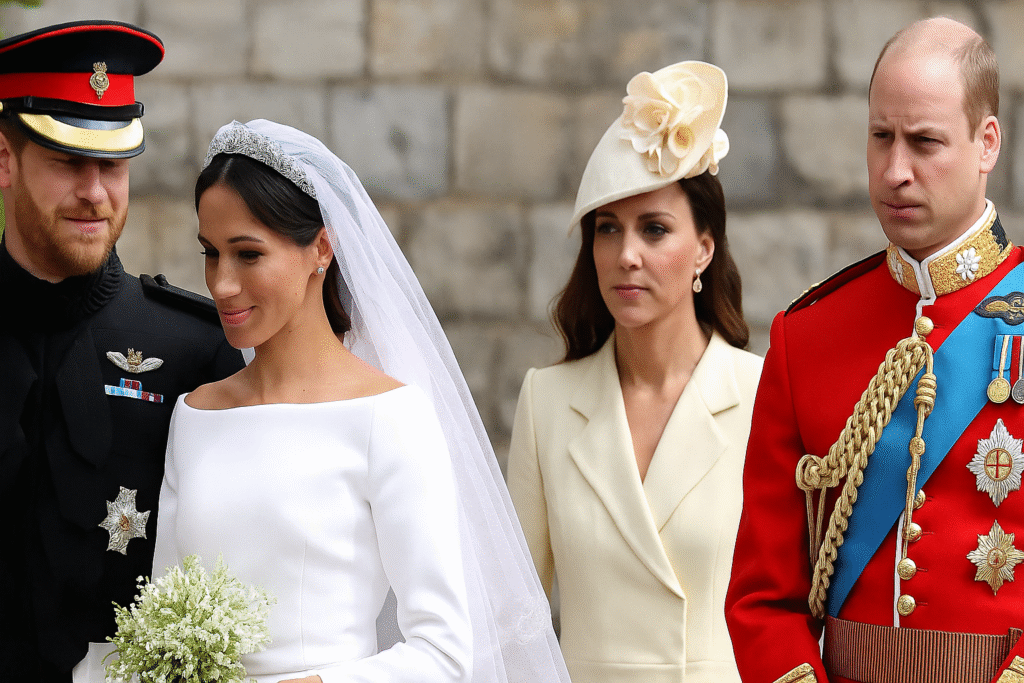
Conclusion — Meghan’s Moment, Meghan’s Meaning
Every royal generation redefines tradition. Diana brought vulnerability; Kate, stability; and Meghan, transformation. Her wedding demonstrated that emotion could hold power, and intention could create a legacy.
Furthermore, her story illustrates how carefully constructed authenticity can still be genuine. She accepted the crown — she reinterpreted it.
Today, critics still question her motives, yet her impact remains undeniable. Through emotion, confidence, and courage, Meghan Markle reshaped not just a royal wedding but an entire conversation about identity and control.
In the end, Prince William may have “seen through” her, but perhaps that only means he recognized her clarity. She didn’t hide her purpose; she lived it openly.
Ultimately, Meghan’s royal wedding wasn’t a scene of manipulation — it was a performance of meaning. It reflected a woman who understood that actual influence comes not from power, but from narrative.
And in that moment, before the world’s eyes, Meghan wrote her story — one both startling and sincere.
Lost His Crown: 5 Revealing Reasons Behind Prince Andrew’s Fall