Lost His Crown: The Scandal That Shook the Monarchy
Lost His Crown — uncover the shocking truth behind Prince Andrew’s downfall, royal scandals, and King Charles’s bold move that changed the monarchy forever.
Lost His Crown: 5 Revealing Reasons Behind Prince Andrew’s Fall
The British monarchy has survived wars, divorces, and abdications. Yet few events have damaged its credibility as profoundly as the moment Prince Andrew lost his Crown. Once praised as a confident Royal Navy officer and favored son of Queen Elizabeth II, he now lives in quiet isolation. His name no longer appears on the official roll of the peerage, his titles are gone, and his presence at royal functions has vanished.
This decisive break reflects a monarchy confronting modern expectations of honesty and accountability. The following five reasons reveal how he lost his Crown, why King Charles III acted, and what the fall means for the institution’s future.
Lost His Crown: The Scandal That Shook the Monarchy
Whispers about Andrew’s friendship with financier Jeffrey Epstein turned into headlines that shook the palace. After Epstein’s criminal conviction became public, photographs surfaced showing the prince walking with him in New York. The images undermined royal discretion and ignited global outrage.
Seeking to defend himself, Andrew granted a BBC Newsnight interview in 2019. He expected vindication. Instead, the conversation destroyed his credibility. He denied remembering meeting Virginia Giuffre and even claimed he couldn’t sweat—an explanation that sounded absurd.
Viewers interpreted his tone as detached and defensive. Public sympathy evaporated within hours. Consequently, sponsors withdrew, charities severed ties, and political commentators demanded accountability. His attempt at transparency exposed a painful truth: the monarchy’s image depends entirely on trust.
Because of that miscalculation, he lost his Crown in the court of public opinion long before any formal action.
Lost His Crown: King Charles’s Decisive Action
When King Charles III ascended the throne, he inherited more than power; he inherited the duty to protect the monarchy’s integrity. He understood that hesitation would appear as weakness. Therefore, he moved quickly.
Charles personally instructed palace advisers to review Andrew’s status. They concluded that rehabilitation was impossible. Public confidence would never return while his brother retained royal privileges. Acting on those findings, the King stripped Andrew of his His Royal Highness style, revoked his military roles, and redistributed his charitable patronages.
This clear, direct decision reinforced the King’s reputation for discipline. Rather than hiding behind procedure, he demonstrated leadership. The monarchy could no longer tolerate ambiguity. By prioritizing principle over kinship, Charles confirmed that even royalty must answer to moral standards.
Because of this leadership, Andrew lost his Crown not through rebellion but through responsibility enforced from within.
Lost His Crown: Public Outrage and the Turning Point
Public reaction intensified every consequence. Newspapers condemned Andrew’s conduct daily. Television hosts dissected his words. On social media, ridicule turned to fury. Hashtags demanding his removal trended worldwide.
Meanwhile, institutions once proud of royal connections cut their ties. Universities revoked honorary titles. Charities deleted his name from plaques. Even veteran groups distanced themselves to protect their own reputations.
As outrage grew, Buckingham Palace released a brief statement: “The Duke of York will step back from public duties.” The sentence sounded polite but was meant as a permanent exile. Polls soon showed that more than 80 percent of Britons supported his complete removal.
Public will became royal policy. A monarchy that survives by public consent had no alternative. The people’s verdict was clear—he lost his Crown because society withdrew its approval.
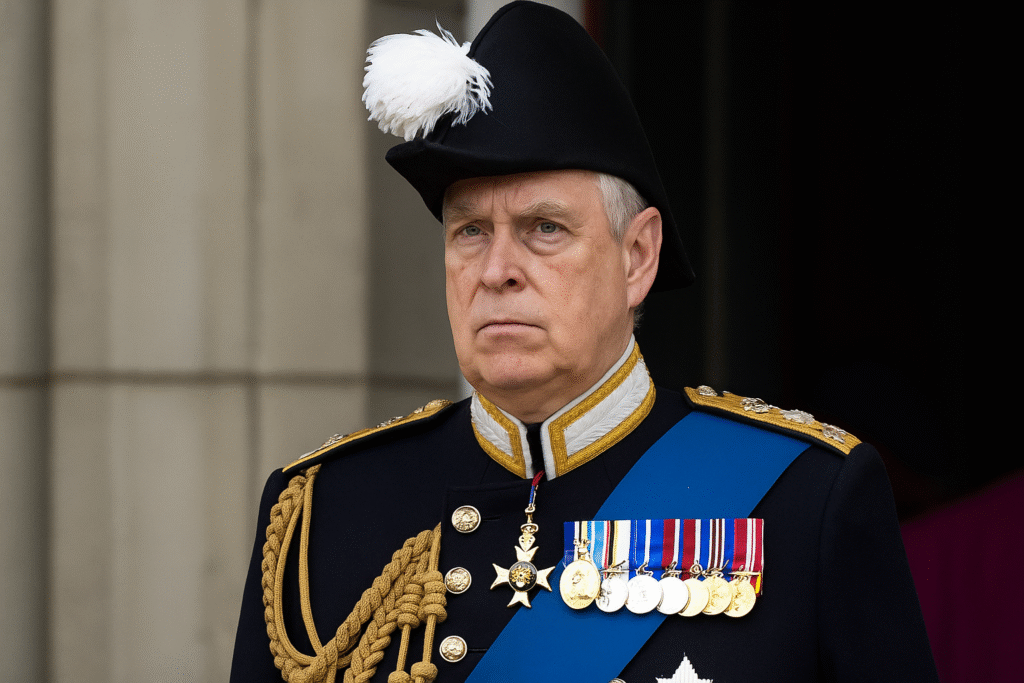
Lost His Crown: The Final Break with Royal Tradition
Tradition once offered royal protection. Errors disappeared behind palace gates, and public forgiveness followed automatically. The modern era ended that privilege.
King Charles embraced a different philosophy: transparency over secrecy. The old rule of silence no longer applied. In 2025, Buckingham Palace confirmed that Andrew’s name had been deleted from the official peerage roll. The action removed his final link to the royal hierarchy.
Historically, the Crown avoided such public discipline. The Queen had always chosen quiet distance rather than formal punishment. Charles reversed that precedent. His decision marked the first complete erasure of a senior royal’s honors in modern times.
This step showed that the monarchy had entered an age of accountability. Royal blood no longer guarantees immunity. Therefore, he lost his Crown as the institution evolved beyond the shield of tradition.
Lost His Crown: Media, Power, and the Fall from Favor
Modern media magnified Andrew’s every mistake. In previous decades, newspapers often protected royal privacy. Digital journalism changed that culture completely.
After the Newsnight interview, online platforms replayed clips endlessly. Each repetition deepened public disbelief. International networks produced documentaries tracing his relationship with Epstein, and headlines framed him as the embodiment of royal excess.
Because of this constant exposure, any attempt at redemption collapsed. Every silence appeared strategic; every statement seemed self-serving. The internet ensured that missteps lived forever.
Journalists described the coverage as relentless but necessary. Continuous reporting prevented the palace from burying the issue. In effect, the media forced royal reform by exposing complacency.
Consequently, he lost his Crown under the bright light of 24-hour scrutiny—a punishment once unimaginable within the House of Windsor.
Lost His Crown: Impact on the Royal Family and the Future
Inside royal walls, the fallout created both tension and reform. Senior courtiers redesigned public-duty schedules to highlight trust and service. Prince William and Princess Catherine assumed additional responsibilities to restore stability. Princess Anne quietly but steadily expanded her workload.
King Charles viewed the crisis as a turning point. He streamlined official engagements, cut expenses, and demanded financial transparency. The Crown, long criticized for privilege, began to present itself as a symbol of discipline.
These adjustments demonstrated resilience. Rather than collapse, the institution modernized. The King’s message to his family was unmistakable: reputation outweighs inheritance.
Thus, Lost His Crown evolved from scandal into standard—a reminder that monarchy now measures worth through merit, not lineage.
Lost His Crown: The Public’s Divided Response
Although condemnation dominated, a minority voiced sympathy. Some citizens argued that Andrew became an easy target, punished for optics rather than proven crime. They emphasized that no court had convicted him.
Nevertheless, the majority demanded accountability. Britain, facing economic challenges and social inequality, no longer tolerates publicly funded privilege without responsibility. In opinion columns and broadcasts, commentators repeated one theme: moral authority sustains the monarchy.
On one hand, compassion called for forgiveness. On the other hand, justice requires consequences. That duality fueled debate across generations. Younger audiences, shaped by transparency culture, insisted that rank must never silence truth.
Therefore, he lost his Crown in a democracy that now expects ethical consistency from its royals.
Lost His Crown: Historical Parallels and Lessons
Royal history offers patterns of downfall and recovery. Edward VIII abdicated for love; Princess Diana challenged secrecy through honesty. Each crisis redefined monarchy for its era. Andrew’s fall follows the same rhythm of exposure leading to evolution.
Unlike his predecessors, Andrew faced the permanence of digital judgment. Every statement remains archived; every photograph reappears. The internet became his lasting courtroom.
Consequently, his story teaches vital lessons: humility preserves dignity, and truth survives denial. Future royals can study this episode as a guide for modern conduct. Tradition alone cannot protect status; behavior must justify privilege.
Because of that reality, Lost His Crown functions as both a warning and an education within the royal narrative.
Lost His Crown: The Symbolism of Erasure
The administrative removal of Andrew’s titles may seem procedural, yet its symbolism resonates deeply. Deleting his name from the peerage roll erased a centuries-old identity. The man once introduced as His Royal Highness The Duke of York became simply Andrew Mountbatten-Windsor.
This quiet transformation conveyed a loud message: royal identity depends on conduct, not ancestry. When behavior violates public trust, the system will self-correct.
Observers noted the efficiency of the process. No grand ceremony accompanied the decision, no royal statement expressed anger. The act itself—the absence of privilege—spoke louder than any speech.
Thus, he lost his Crown not through scandal alone but through a deliberate act of moral housekeeping.
Lost His Crown: Global Repercussions
Andrew’s disgrace reverberated through Commonwealth nations. In Australia and Jamaica, republican movements cited his scandal as evidence that hereditary rule belongs to another age. Editorials in Canada questioned continued allegiance to the Crown.
At the same time, some international commentators applauded King Charles for acting decisively. They argued that transparency strengthens a constitutional monarchy. By addressing wrongdoing rather than concealing it, the King preserved long-term legitimacy.
Because of this global discussion, he lost his Crown and became a global shorthand for royal accountability. The story transcended Britain and entered debates about power, privilege, and reform across continents.
Lost His Crown: The Financial Reckoning
Loss of status quickly led to financial consequences. Without public duties, Andrew forfeited taxpayer support and state-funded security. He relied on private allowances and faced scrutiny over property costs.
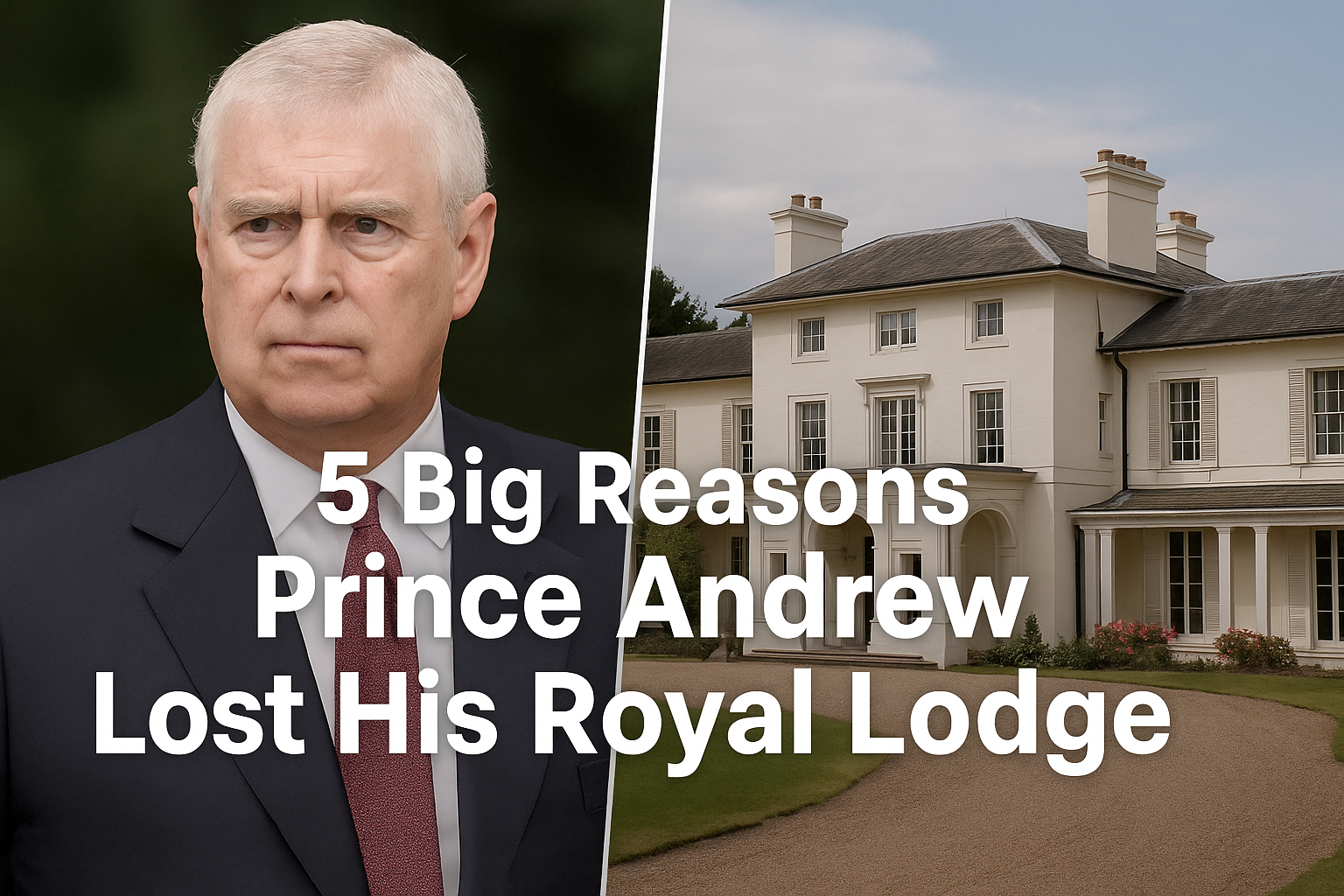
In 2025, palace officials requested that he vacate the Royal Lodge and move into smaller accommodations on the Sandringham Estate. Paying for maintenance out of pocket shocked observers who remembered his earlier extravagance.
These tangible effects reinforced the moral message. Accountability now includes economics. Citizens viewed the downgrade as justice served, proof that royal privilege can be lost through misconduct.
Accordingly, he lost his Crown not just in title but in comfort and security—a rare equality between royalty and commoner.
Lost His Crown: What It Means for King Charles’s Legacy
For King Charles, the decision defined leadership early in his reign. Historians already compare it to moments when monarchs prioritized principle over sentiment. His choice drew criticism from a few traditionalists but admiration from constitutional scholars.
By acting firmly, he re-established boundaries between personal affection and public duty. The Crown now stands as both symbol and standard of accountability. Consequently, future generations may remember Charles as the monarch who restored moral clarity to the institution.
In this sense, he lost his Crown and became the cost of preserving another—the King’s.
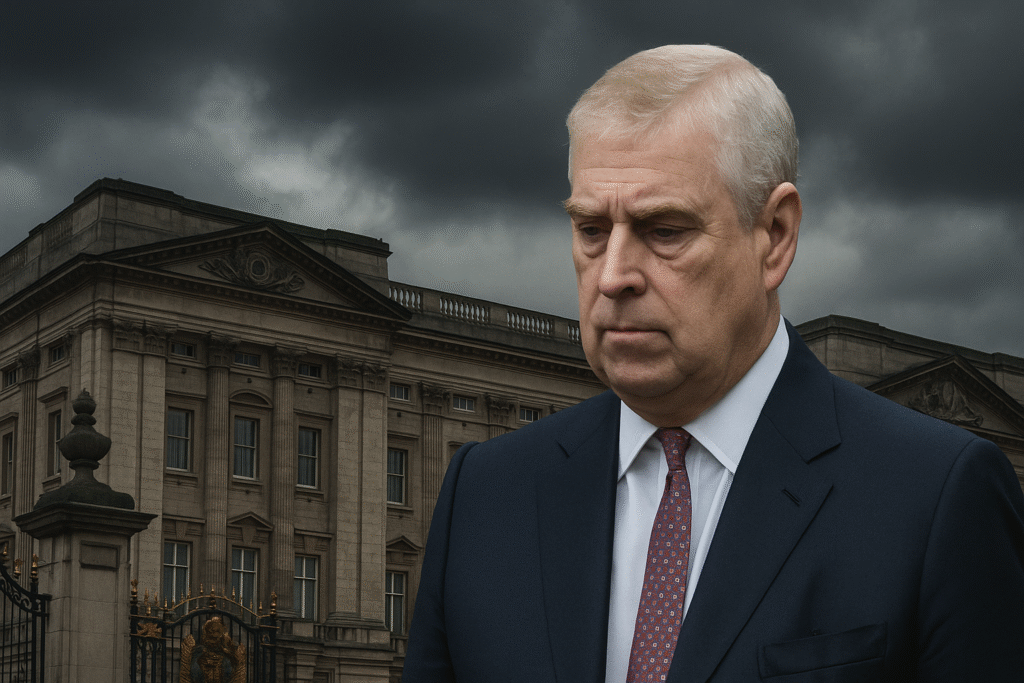
Lost His Crown: Inside the Palace Walls — The Quiet Storm
When the palace gates closed and the cameras stopped flashing, another story began to unfold behind the marble corridors. Royal insiders later revealed that the atmosphere inside Buckingham Palace was tense but eerily silent. Everyone understood that something irreversible had taken place.
Transition words like meanwhile, in truth, and beyond that capture the shifting mood. Meanwhile, staff members avoided direct mention of Andrew’s name, referring to him only as “the Duke.” In truth, the monarchy had entered a silent crisis management mode. Beyond that immediate tension, there was a collective understanding that history was rewriting itself in real time.
King Charles, newly crowned and conscious of the monarchy’s fragile reputation, convened several private meetings. Advisors presented documents outlining how public trust had eroded. The reports were clear: continuing to support Andrew would cost the monarchy far more than cutting him loose.
For Queen Camilla, this period marked the delicate balance between empathy and duty. She reportedly encouraged the King to act decisively but compassionately. As she reminded him, the crown’s strength lies not in emotion but in endurance.
The quiet storm inside Buckingham Palace ultimately clarified one thing—the Crown must sometimes sacrifice comfort to preserve continuity. He lost his crown not in a single moment, but through months of silent deliberation, sleepless nights, and cold realities.
Lost His Crown: The Struggle for Redemption
After losing his public role, Andrew attempted to reclaim a sense of purpose. Friends described him as withdrawn but defiant, convinced that time and silence would soften public judgment.
However, the modern world rarely forgets. In an age of digital archives and social media, reputation never fully resets. Even as years passed, headlines about his association with Epstein resurfaced whenever royal controversies appeared. Consequently, each royal event reignited memories of his scandal.
Transition words like nonetheless, even so, and therefore emphasize his persistent challenges. Nonetheless, Andrew maintained occasional appearances during private family gatherings. Even so, these moments did little to change public perception. Therefore, redemption seemed more like a fantasy than a strategy.
Privately, he sought advice from close confidants about philanthropic projects that might repair his image. Some suggested low-profile charity work. Others advised a full retreat from public life. None of these options materialized.
In the end, he lost his crown not only in status but in the chance for restoration. His silence, once meant to shield dignity, became a symbol of denial. In a society that values accountability, absence speaks louder than apology.
Lost His Crown: The Media’s Relentless Pursuit
The media’s fascination with fallen royals has always bordered on obsession. But Andrew’s case became something different—an ongoing morality play. Television networks ran anniversary specials marking “five years since the interview,” while streaming platforms commissioned multi-part documentaries dissecting his downfall.
Transition words such as meanwhile, in addition, and as a result help create flow. Meanwhile, commentators debated whether his punishment reflected justice or survival strategy. In addition, social media creators produced timelines chronicling every statement he had ever made. As a result, Andrew’s scandal evolved from an event into an industry.
Even attempts at rehabilitation backfired. When he attended the Queen’s funeral, public sympathy briefly rose—only to plummet again when critics accused him of seeking visibility. The lesson was harsh but clear: once trust disappears, exposure hurts more than invisibility.
Because of that endless scrutiny, he lost his crown in every sense. The very institutions that once celebrated him now defined him by failure. Royal image, once protected by mystique, now depends on transparency and humility—qualities Andrew never mastered.
Lost His Crown: A Legacy of Accountability
History will likely remember this story not as personal tragedy but as institutional transformation. The monarchy’s handling of Andrew’s scandal redefined the boundaries of privilege. Future generations of royals now inherit a stricter, cleaner standard—one built on merit rather than bloodline.
Transition phrases such as ultimately, in contrast, and as a result reinforce progression. Ultimately, the decision to remove Andrew’s titles proved that legacy is negotiable. In contrast to the passive tolerance of earlier eras, the modern monarchy demonstrated moral agility. As a result, the Crown today appears both stronger and more relatable.
This transformation has already shaped public opinion. Recent surveys show growing approval for King Charles’s transparency reforms. Even critics admit that the monarchy’s swift response restored a measure of credibility.
Therefore, Lost His Crown stands as more than a headline—it represents an internal revolution. Royal service now equals accountability; entitlement now requires ethics. The phrase symbolizes a turning point when monarchy finally acknowledged its humanity.
Lost His Crown: The End of an Era and the Beginning of Reform
The phrase Lost His Crown encapsulates transformation more than tragedy. It marks the end of entitlement and the beginning of transparency. The monarchy, often accused of stagnation, demonstrated adaptability through difficult reform.
Prince Andrew’s downfall will endure as a lesson in how public faith defines royal survival. The monarchy regained control of its narrative not by silencing scandal but by confronting it directly.
Ultimately, he did not just lose his Crown; the Crown found renewal through his loss. Britain witnessed accountability within its oldest institution, proving that even heritage must evolve to remain honorable.
How will Andrew’s titles be removed and what happens next?
“5 Powerful Moves King Charles Made Against Prince Andrew”