What Prince Andrew’s Exit Means for the Future of the Royal Family
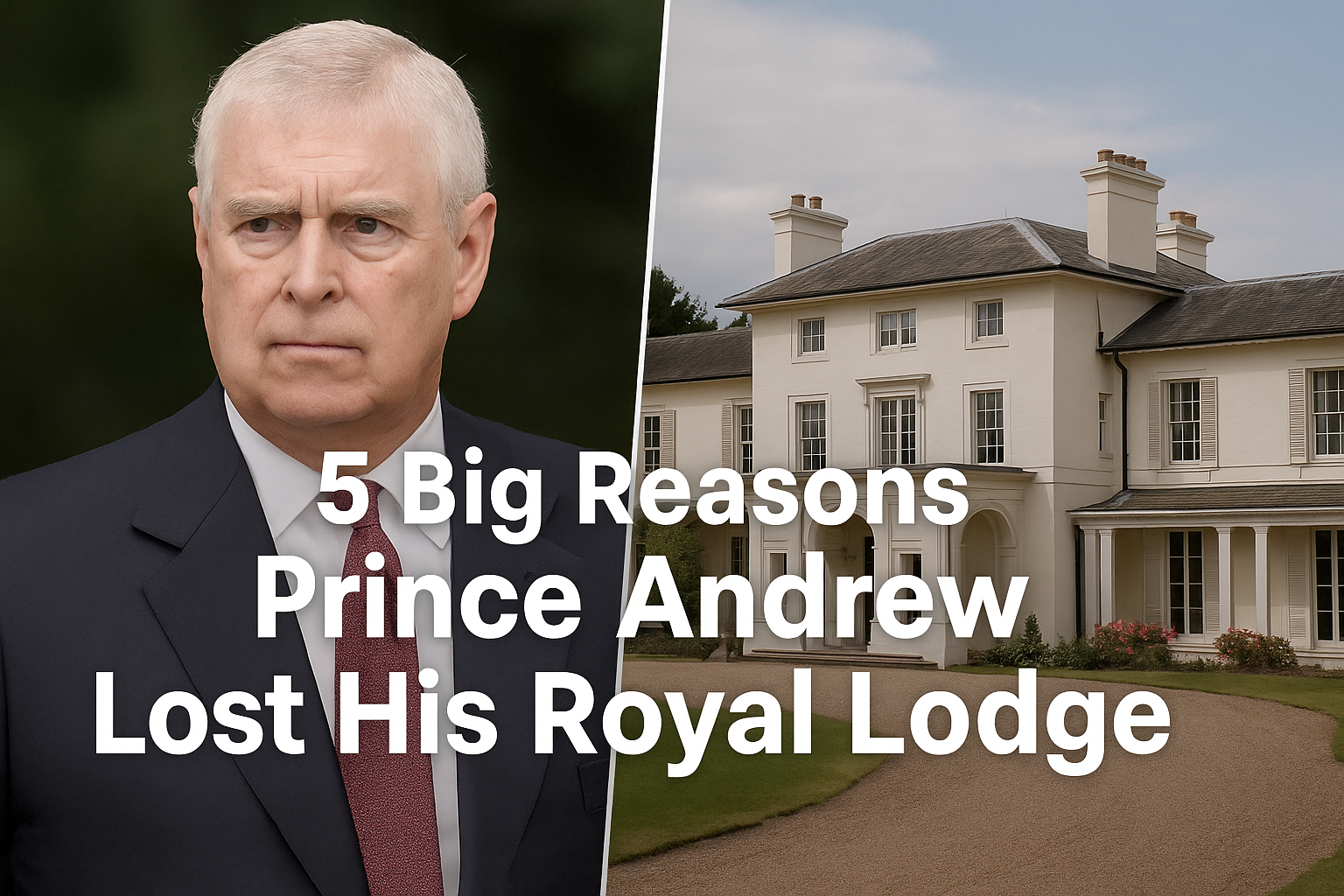
Prince Andrew faces a royal shake-up as he loses Royal Lodge. Discover the 5 big reasons behind this dramatic exit and what it means for the monarchy.
For decades, Prince Andrew called the Royal Lodge his sanctuary. Tucked inside Windsor Great Park, the residence reflected the quiet luxury of royal life. Surrounded by gardens, history, and silence, the home offered comfort far from the world’s gaze.
Those walls held memories of happier days — family gatherings, laughter, and privacy. Yet today, they echo with change. After months of tense talks and growing public scrutiny, the Prince Andrew is preparing to leave the grand estate.
His departure is more than a housing matter. It marks a turning point for the monarchy. Behind the graceful façades, the royal family is confronting what modern Britain demands: accountability, fairness, and humility.
This is not simply a story of one man losing a home. It is a story of tradition clashing with reform — and of a Prince facing the price of privilege in a changing world.
Prince Andrew’s Royal Lodge Controversy: An Overview
The Royal Lodge is one of Windsor’s crown jewels. Built centuries ago, it has served as home to many royals, including the Queen Mother. For Prince Andrew, it became a symbol of comfort after he stepped back from public life.
The property spans 30 rooms and is surrounded by 98 acres of parkland. Within its walls, the Prince found stability after turbulent years. He shared it at times with Sarah Ferguson, the Duchess of York, maintaining a quiet family rhythm.
Over time, though, the home became a lightning rod for criticism. Many asked how a Prince without duties could justify living in such opulence. Costs for staff, upkeep, and security climbed into the millions. Meanwhile, the King’s team aimed to modernize the monarchy’s image — trimming costs, reducing waste, and rebuilding public trust.
Inside palace corridors, quiet discussions began. Advisors raised questions about optics and responsibility. What had once been a private matter soon grew into a national conversation about fairness and reform.
The Royal Lodge and Its Historic Weight
The Royal Lodge carries more than bricks and marble. It holds the weight of history. Generations of royals have lived and celebrated there. To the Prince, it represented more than comfort — it was his last link to family tradition.
When Queen Elizabeth II allowed him to stay, it was an act of compassion. The late monarch valued stability and loyalty. For her son, the home provided safety at a time when headlines grew unkind.
But times have changed. Britain now expects transparency and equality. A large estate occupied by one royal, no longer active in service, no longer fit the mood of the nation. The Lodge began to symbolize privilege rather than duty.
The Prince found himself at a crossroads: protect tradition or adapt to a new era. In the end, tradition could no longer shield him. The monarchy had to move forward.
How Tradition Became a Liability
Tradition once protected the Crown. It offered dignity and continuity. Yet in today’s world, tradition without accountability can appear detached.
The Prince long believed that royal customs guaranteed respect. But public expectations shifted. Citizens now value openness more than ceremony. They admire service over status.
Lavish homes and guarded lives no longer inspire admiration. Instead, they raise questions. A Prince living in quiet luxury without public duty no longer matched the spirit of modern Britain.
In that way, the very values that once protected him began to isolate him. Tradition turned from comfort into a cage.
Quiet Pressure from Inside the Palace
Within the palace, the message was gentle but firm. Courtiers spoke in careful tones. They reminded the Prince that the monarchy must reflect responsibility.
Change did not come as a command. It came as a conversation. Each meeting, each letter, each quiet reminder carried weight. The royal household functions through suggestion, not confrontation. Yet everyone sensed the direction of travel.
As weeks passed, the Prince began to understand. Staying would mean standing against the tide. Leaving would mean aligning with reform.
The decision was painful but inevitable.
Reason One — Rising Tensions with King Charles III
When King Charles III took the throne, he envisioned a modern, transparent monarchy. He sought to reduce costs, clarify roles, and emphasize service.
The Prince, however, viewed Royal Lodge as his last refuge. To him, it was home — not just a royal asset. He saw the move as unnecessary and deeply personal.
Discussions between the brothers began calmly. They ended in formality. Advisors emphasized the importance of fairness and image. The King saw reform as a duty; the Prince Andrew saw it as a loss.
Neither wanted confrontation, yet emotion clouded reason. Every conversation deepened the distance between them. The King’s resolve never wavered. The Prince Andrew, feeling misunderstood, held his ground until silence replaced dialogue.
Their bond survived, but not unchanged. What began as a practical debate revealed deeper divisions — between reform and remembrance, progress and pride.
Historical Echoes of Royal Reform
This struggle is not new. History is filled with moments when monarchs faced the same test: adapt or decline. George III, Queen Victoria, and even Elizabeth II reshaped their courts to maintain trust.
For Charles III, this is his defining moment. Reform keeps the monarchy relevant. For the Prince Andrew, it feels like personal exile. Yet both roles are part of the same story — one leading, the other yielding.
History will likely see the Prince Andrew not as a victim, but as a symbol. His loss underscores the price of transformation within an ancient institution.
Reason Two — Public Backlash and Reputation Damage
Public perception became the loudest voice in the room. The Prince Andrew reputation had suffered for years. Media coverage was relentless. Social media amplified criticism with every headline.
Polls showed a steep decline in trust. Even supporters of the monarchy began to question why a non-working Prince held such comfort. Each photograph of the Lodge — its gates, its manicured lawns — reignited anger about privilege.
Because the monarchy’s strength depends on perception, inaction was not an option. Every article that mentioned the Prince risked overshadowing the King’s efforts to modernize.
The Prince believed silence might heal the damage. It didn’t. Silence became distance. Distance became a misunderstanding. When he finally responded through quiet cooperation, it was already too late to shift the public mood.
In the court of public opinion, time rarely shows mercy.
Reason Three — Mounting Financial Strain on Royal Estates
Money often decides what tradition cannot. Royal Lodge costs millions each year to maintain. Staff, security, and repairs never stop.
Under Charles III’s reforms, auditors reviewed each estate. They compared expenses against purpose. The Prince Andrew residence offered privacy, not public function. It is no longer aligned with fiscal responsibility.
The Prince Andrew offered to contribute personally. Still, the King wanted sustainable funding, not partial payments. Frogmore Cottage — empty since the Sussexes left — presented a logical alternative.
By reallocating properties, the King reduced costs and signaled fairness. The decision wasn’t emotional. It was practical. In today’s economy, even royal finances face scrutiny.
The Prince’s home became a symbol of what must change: comfort yielding to accountability.
Reason Four — William and Kate’s Growing Influence
The younger generation of royals represents a new style of leadership. The Prince and Princess of Wales promote accessibility, empathy, and efficiency. Their popularity gives them a subtle but undeniable voice in family affairs.
Both William and Catherine supported the King’s goal of modernization. They believed reform had to begin from within. Every royal privilege should reflect service to others.
The Prince Andrew situation, though sensitive, conflicted with that philosophy. To the public, one Prince Andrew worked for the people while another lived apart. That contrast grew too sharp to ignore.
Insiders say discussions between the families remained respectful. Yet the younger couple’s approach—open, relatable, forward-looking—highlighted how far the Prince had drifted from the institution’s new image.
Their influence didn’t push him out; it simply made staying impossible.
Reason Five — A Streamlined Monarchy for a Modern Age
King Charles’s vision is clear: fewer royals, more substantial impact. Each role, title, and residence must serve a visible purpose.
The Prince’s continued residence at Royal Lodge did not fit that model. The estate had no official use and demanded heavy funding.
Audits revealed inefficiencies. Public opinion demanded clarity. Reform became not just desirable but necessary.
Palace advisors designed a slow, dignified transition. They avoided humiliation while securing progress. After months of talks, the Prince Andrew realized resistance offered no reward.
Cooperation, though difficult, preserved dignity. The monarchy gained unity; the Prince Andrew regained quiet respect. His departure brought the controversy to a close.
The Emotional Cost Behind the Decision
Behind every royal decision lies emotion. For the Prince, leaving Royal Lodge means parting with a personal history. Within those walls, he found moments of peace after years of public struggle.
Friends describe him as reflective, not bitter. He understands the King’s reasoning yet feels the loss deeply. The Lodge was not just home—it was memory, stability, and identity.
Still, even he knows change is overdue. The monarchy moves forward, and he must adapt. The challenge now is not survival but reinvention.
Public Opinion as Royal Currency
In a constitutional monarchy, power depends on perception. The Prince Andrew story proves it. Public trust, once lost, can only be rebuilt through action.
By making this decision, the King reinforced his credibility. He showed that family ties do not override fairness. The move also reassured citizens that reform applies to all, regardless of title.
For the Prince, this lesson comes late but not too late. Acceptance, not avoidance, will define his future standing.
The Media’s Framing of the Story
News outlets followed every step. Some painted the Prince as defiant; others as resigned. The truth lies somewhere in between.
Reputable newspapers emphasized structure and strategy. This was no eviction—it was managed reform. Each palace statement used measured tone, balancing honesty with respect.
Over time, the narrative changed. What began as a scandal became evidence of leadership. The palace showed control through calm communication.
Internationally, commentators called it a “model of modern monarchy management.” Even critics admitted the Crown handled the situation with precision.
Where the Prince Might Go Next
Speculation continues. Some believe the Prince may relocate to Frogmore Cottage. Others suggest smaller Windsor properties or even a royal apartment in London.
Wherever he goes, the move will symbolize humility. Leaving grandeur behind could help rebuild trust.
The Prince still carries his title and history, but this transition allows him to redefine purpose. The palace benefits too. The Lodge can now host official events or charity functions—precisely the kind of modern use the King envisions.
How the Public Views the Transition
Public reaction reflects Britain’s divided mood. Many applaud the decision as fair. Others sympathize with the Prince, recognizing the personal cost of leaving a cherished home.
This balance of criticism and compassion defines today’s relationship between royals and citizens. People expect accountability but appreciate grace.
The palace’s discreet handling has earned respect. Transparency—once rare in royal matters—has become its most vigorous defense.
Comparing Eras: Tradition Meets Reality
In the past, royal matters stayed hidden. Silence was the rule. Now, openness protects rather than harms. The Prince Andrew situation marks that shift.
Officials released clear, factual updates. By doing so, they prevented gossip from defining the story. This approach reflects a new era of communication—one where truth, told calmly, outlasts rumor.
Tradition remains vital, but communication keeps it alive. For the monarchy, honesty is the new etiquette.
Lessons from the Royal Lodge Saga
The Prince Andrew journey carries a broader meaning. Privilege without purpose invites scrutiny. Comfort without contribution creates resentment.
King Charles showed that fairness begins within his own family. By applying reform evenly, he strengthened credibility. The monarchy emerged more accountable, not weaker.
The Prince Andrew acceptance shows that even difficult change can restore dignity. Adaptation, not resistance, ensures continuity.
The Family’s Balancing Act
Throughout this process, compassion shaped the palace’s approach. The King treated the Prince Andrew with dignity, ensuring private comfort even while enforcing public accountability.
Insiders say discussions were respectful, never cruel. The goal was transformation, not punishment. By blending firmness with empathy, the monarchy preserved both principle and peace.
This is the new royal balance: authority guided by kindness.
A Turning Point in Royal Communication
Gone are the days of silence after scandal. Today, the palace recognizes the power of steady information. Officials shared updates without drama. The tone stayed factual, never defensive.
The Prince’s quiet cooperation helped the message resonate. Rather than a family feud, the story became one of evolution. This subtle shift redefined how the monarchy manages public pressure.
The Meaning of Grace in Transition
Change tests everyone, even royals. The Prince Andrew acceptance of the decision, though reluctant, demonstrated grace. His restraint softened public perception.
He may have lost a residence, but he gained a measure of respect. Humility can often heal more than privilege protects.
Through this transition, the Prince reminded observers that dignity doesn’t depend on wealth or property—it depends on how one faces loss.
The Bigger Picture: What This Moment Means for the Monarchy
This chapter reflects the journeys of more than one man. It defines the monarchy’s ability to grow within a modern world. The Prince Andrew story has become the symbol of change handled with care.
King Charles III, supported by William and Catherine, has proven that reform can coexist with respect. Their choices show a clear message: relevance must be earned, not inherited.
For the Prince, this is not an ending but a renewal. Stepping away from grandeur may open the door to quiet redemption.
The Prince’s Changing Public Image
Public opinion has always shaped royal life, but in recent years, it has become decisive. For the Prince, image once meant stability. Today, it means vulnerability. Every decision he makes is analyzed, often harshly. While older generations judged actions through tradition, modern audiences evaluate through transparency. A smile at a charity event once silenced critics; now, silence itself invites suspicion. The Prince, who grew up in an age of press control, struggles in a world ruled by social media. Yet despite criticism, he remains a figure of fascination—a reminder that even those born into privilege must navigate public judgment like everyone else.
Life Inside Royal Lodge Before the Decision
Before reform talks began, life at Royal Lodge was remarkably peaceful. The Prince Andrew enjoyed simple routines—morning walks, quiet breakfasts, and evenings surrounded by family photos. Friends often described the estate as “frozen in time.” The walls carried echoes of laughter from his daughters’ childhood. Servants maintained the grounds with pride, knowing the Lodge had hosted monarchs for centuries. Yet beneath the calm, tension simmered. Advisors visited more often. Letters from palace officials arrived with increasing frequency. Gradually, the Prince Andrew sensed that change was approaching, though few dared to say it aloud. The peace he valued most would soon demand sacrifice.
The Prince’s Private Support Network
Throughout the ordeal, the Prince was not entirely alone. Friends from military circles offered moral support. His daughters, Princess Beatrice and Princess Eugenie, maintained close contact and often visited the Lodge. They reminded their father that family affection could outlast controversy. Sarah Ferguson also played a quiet but crucial role. Her optimism helped soften tension inside the house. Despite media speculation about estrangement, those closest to thePrince Andrew say family dinners continued, filled with laughter and nostalgia. These private bonds helped him stay composed even as public opinion turned cold. They also reminded him that reputation fades, but relationships endure.
Final Thoughts — The Crown’s Path Forward
The Royal Lodge once stood for privilege. Now, it stands for progress. The Prince’s departure shows that the Crown listens, adapts, and evolves.
Through patience, planning, and compassion, the monarchy redefines itself. The King’s reforms prove that leadership is not about perfection but about principle.
The Prince, though no longer surrounded by the luxury of Windsor’s great estate, remains part of the royal story. His journey reflects the truth that even in gilded halls, change is the only constant.
In the end, legacy is not built by holding on—it is built by letting go.
Pressure builds on Prince Andrew to vacate his mansion
“A New Legacy: King Charles Honors 50 Years of LGBT Heroes in Service”