King Charles Evicting Princesses Beatrice and Eugenie: A Royal Turning Point
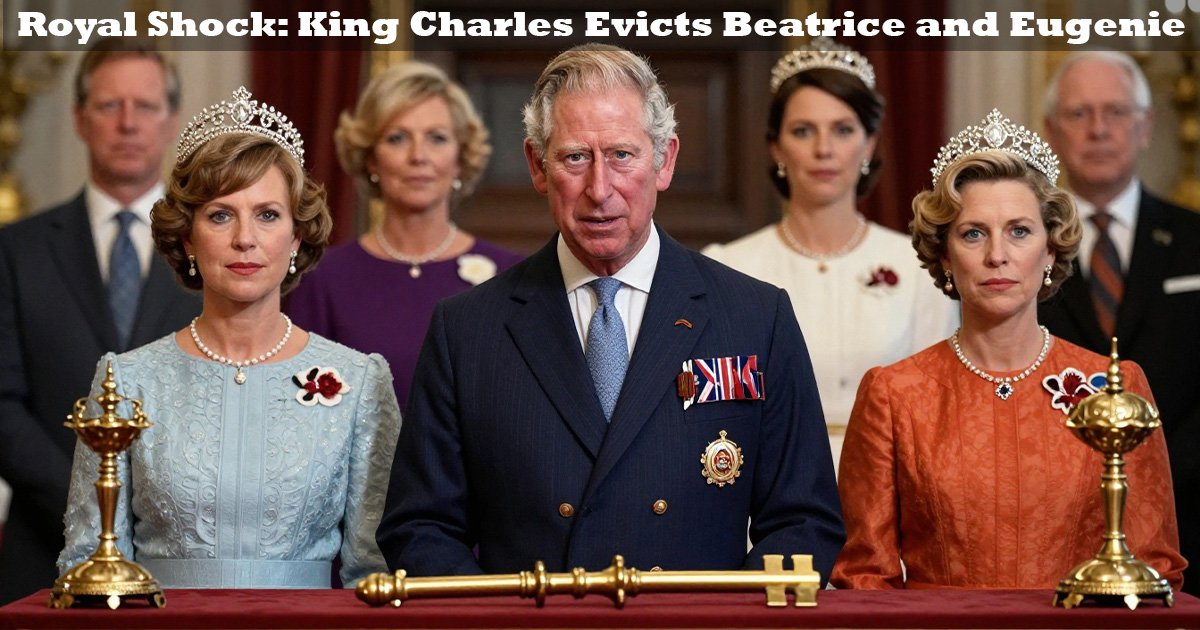
The news that King Charles is evicting Princesses Beatrice and Eugenie from their London homes has shocked royal watchers and the British public alike.
As a result, many people now question how royal residences are used, since they represent tradition, privilege, and stability. However, recent developments show that even long-standing royal arrangements are changing.
According to palace sources, King Charles has told Princess Beatrice and Princess Eugenie that they can no longer remain in grace-and-favour properties within royal estates. Instead, they must now find private homes without public financial support.
While this decision may appear harsh, it reflects a wider transformation in the British monarchy. King Charles has actively pushed for a smaller and more efficient royal institution, and this move clearly supports that goal.
Table of Contents
Why King Charles Is Making This Move
The decision does not appear to be personal. Instead, it reflects King Charles’s long-standing belief that royal resources should primarily support family members who carry out official duties on behalf of the Crown.
Currently, the King’s core working royal team includes King Charles III, Queen Camilla, The Prince and Princess of Wales, Princess Anne, and the Duke and Duchess of Edinburgh.
However, Princess Beatrice and Princess Eugenie are not considered working royals. As a result, they do not carry out regular official engagements funded by the monarchy.
Therefore, palace insiders suggest that the King sees little justification for continuing to allocate prime royal housing to family members who do not perform public royal duties.
King Charles Evicting Princesses Beatrice and Eugenie Fits a Larger Strategy
The story of King Charles evicting Princesses Beatrice and Eugenie cannot be understood without examining his broader plans for the monarchy.
Even before becoming King, Charles expressed concerns about the size and cost of the royal household. He repeatedly signaled that future generations would likely see a more streamlined institution.
As a result, his goal has often been described as a “slimmed-down monarchy.”
This approach aims to:
- Reduce operating costs
- Increase accountability
- Focus public funding on active royal duties
- Modernize the institution
- Improve public perception of royal spending
Supporters argue that this strategy reflects modern expectations of transparency and financial responsibility. However, critics believe it risks weakening family ties and reducing the monarchy’s broader support network.
Either way, the direction of reform appears increasingly clear.
The National Audit Office Report That Forced the Issue
One of the most significant factors behind the decision came from a financial review that examined housing arrangements within royal properties.
According to reports, the review revealed that rent assistance linked to the princesses’ accommodations was ultimately supported through royal resources.
The findings did not accuse anyone of misconduct. Instead, they highlighted a situation that became difficult to defend publicly: non-working members of the royal family were benefiting from subsidized accommodation in some of London’s most valuable locations.
In today’s environment, where public accountability and transparency expectations continue to rise, such arrangements face increased scrutiny.
For a monarch focused on demonstrating financial responsibility, maintaining the status quo became increasingly difficult.
The report may not have directly caused the change, but it appears to have accelerated a decision that was already under consideration.
How Princess Beatrice and Eugenie Reacted
Sources close to the family indicate that the news was deeply upsetting.
Both Princess Beatrice and Princess Eugenie have spent recent years maintaining relatively low public profiles.
Much of that caution has been linked to ongoing controversies surrounding their father, Prince Andrew.
During a period when the sisters have largely avoided drawing attention to themselves, the housing decision reportedly came as a painful surprise.
Importantly, insiders have suggested that neither princess views the move as a personal attack.
Instead, the disappointment stems from what the decision symbolizes.
For many years, royal residences represented a tangible connection to their place within the institution.
Losing those homes inevitably sends a message about changing priorities within the monarchy.
Even practical administrative decisions can carry significant emotional weight when family, tradition, and public identity are involved.

What Happens to Their Royal Homes?
The next chapter involves the future use of the properties themselves.
Royal estate space remains extremely valuable, particularly in central London.
Reports suggest that once vacated, the properties could be repurposed for operational needs.
Potential uses include:
Office Space for Palace Staff
As royal administration continues evolving, demand for office facilities remains high.
Former residential spaces can be converted into work areas supporting palace operations.
Accommodation for Senior Employees
Some residences may be reassigned to senior staff members whose roles require close proximity to royal workplaces.
These employees often play critical behind-the-scenes roles in keeping royal operations functioning smoothly.
Future Strategic Uses
The palace may also retain flexibility for future organizational needs as the monarchy continues restructuring.
Whatever the outcome, the properties are expected to remain important assets within the royal estate portfolio.
The Financial Reality Behind the Decision
A major theme behind King Charles evicting Princesses Beatrice and Eugenie is financial accountability.
To begin with, London property prices have reached extraordinary levels. Even modest properties in secure central locations can command prices well above £1 million.
As a result, providing subsidized accommodation in such areas represents a substantial financial benefit.
At the same time, public institutions face increasing scrutiny over spending. Therefore, royal finances are regularly examined by taxpayers, media outlets, and government oversight bodies.
King Charles appears to be actively working to ensure that royal privileges remain closely linked to public service.
Whether one agrees with that philosophy or not, it reflects an effort to align royal practices with modern expectations.
In simple terms, royal housing is increasingly being reserved for those who actively carry out royal responsibilities.
What This Means for the Future of the Royal Family
The implications extend far beyond two residences.
Many royal observers see this decision as a glimpse into the monarchy’s future.
Several trends are becoming increasingly evident:
A Clear Distinction Between Working and Non-Working Royals
The line separating official royals from extended family members is becoming more defined.
Greater Financial Transparency
Future decisions are likely to face stronger financial justification and public explanation.
Reduced Dependence on Royal Perks
Family members who do not undertake official duties may increasingly be expected to support themselves independently.
Institutional Efficiency
Royal assets are likely to be managed with greater emphasis on operational necessity rather than tradition.
These developments may ultimately reshape how future generations experience royal life.

King Charles Evicting Princesses Beatrice and Eugenie: Key Takeaways
Here are the most important points:
- Princess Beatrice and Princess Eugenie have reportedly been asked to find private London residences.
- In addition, no public funding will be provided for alternative housing.
- This move reflects King Charles’s vision of a smaller and more efficient monarchy.
- Financial reviews have also increased pressure to reconsider subsidized accommodation arrangements.
- The decision appears practical rather than punitive.
- Meanwhile, royal properties will likely be repurposed for operational needs.
- Overall, this change signals a broader transformation in how royal resources are allocated.